SANS Internet Storm Center, InfoCON: green SANS Internet Storm Center – Cooperative Cyber Security Monitor
- ISC Stormcast For Tuesday, September 1st, 2026 https://isc.sans.edu/podcastdetail/10076, (Tue, Sep 1st)
 on 1 September 2026 at 02:00
(c) SANS Internet Storm Center. https://isc.sans.edu Creative Commons Attribution-Noncommercial 3.0 United States License.
- Guildma (Astaroth) malware infection from Brazilian Portuguese email, (Tue, Sep 1st)
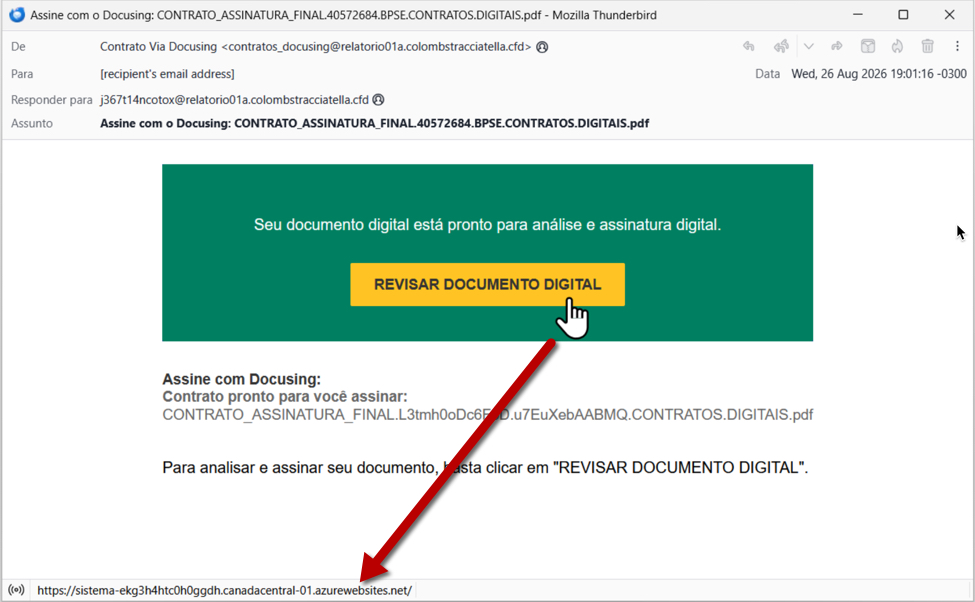 on 1 September 2026 at 00:33
Introduction
- The Coding-Agent Trap: When a “Free” LLM Endpoint Is the Adversary, (Mon, Aug 31st)on 31 August 2026 at 20:00
One of my internet-exposed inference honeypots was discovered, relabeled with sought-after model names, and incorporated into infrastructure apparently used to provide “free” LLM backends. It then received a real coding-agent session &#;x26;#;xe2;&#;x26;#;x80;&#;x26;#;x94; history, filesystem output, working paths, and the agent&#;x26;#;39;s local tool manifest. The honeypot did not request or cause any tool execution; what the request exposed is what a malicious operator in that position could do.
- ISC Stormcast For Monday, August 31st, 2026 https://isc.sans.edu/podcastdetail/10074, (Mon, Aug 31st)on 31 August 2026 at 02:00
(c) SANS Internet Storm Center. https://isc.sans.edu Creative Commons Attribution-Noncommercial 3.0 United States License.
- YARA-X 1.20.0 Release, (Sun, Aug 30th)on 30 August 2026 at 07:14
YARA-X&#;x26;#;39;s 1.20.0 release brings 14 improvements and 13 bugfixes.
Artificial Intelligence Archives – TechRepublic News, Tips, and Advice for Technology Professionals
- OpenAI Purchases Tens of Thousands of Mac minis, Mac Studiosby Aminu Abdullahi on 31 August 2026 at 19:29
OpenAI is reportedly buying tens of thousands of Mac mini and Mac Studio systems as AI labs find a new use for Apple hardware. The post OpenAI Purchases Tens of Thousands of Mac minis, Mac Studios appeared first on TechRepublic.
- Google Upgrades Gemini AI Video: What Omni 1.1 Changes for Creatorsby Joseph Ofonagoro on 31 August 2026 at 16:21
Google’s Gemini Omni 1.1 Flash adds video extensions, frame controls, cheaper previews and upscaled 4K output for AI video creators. The post Google Upgrades Gemini AI Video: What Omni 1.1 Changes for Creators appeared first on TechRepublic.
- Google Sets February 2027 Deadline: Android Apps Must Meet New Memory Limitsby Joseph Ofonagoro on 31 August 2026 at 15:03
Google is setting new Android app memory requirements for February 2027 as developers face stricter Play Store thresholds and rising RAM pressure. The post Google Sets February 2027 Deadline: Android Apps Must Meet New Memory Limits appeared first on TechRepublic.
- Meta Tests Robot Technicians: Inside Its Push to Automate Data Center Workby Aminu Abdullahi on 31 August 2026 at 13:29
Meta is testing robots for data center maintenance, from swapping cables to restarting servers, raising questions about automation and IT staffing. The post Meta Tests Robot Technicians: Inside Its Push to Automate Data Center Work appeared first on TechRepublic.
- What the 49ers and Giants Teach IT Pros About AI Social Engineeringby Zeus Kerravala on 28 August 2026 at 21:10
NFL technology executives share how AI-driven social engineering makes attacks faster and more convincing, offering practical strategies for IT leaders to build non-punitive, multi-channel defenses. The post What the 49ers and Giants Teach IT Pros About AI Social Engineering appeared first on TechRepublic.
Cybersecurity Archives – TechRepublic News, Tips, and Advice for Technology Professionals
- What the 49ers and Giants Teach IT Pros About AI Social Engineeringby Zeus Kerravala on 28 August 2026 at 21:10
NFL technology executives share how AI-driven social engineering makes attacks faster and more convincing, offering practical strategies for IT leaders to build non-punitive, multi-channel defenses. The post What the 49ers and Giants Teach IT Pros About AI Social Engineering appeared first on TechRepublic.
- AI Expansion Meets Security Crises, Costs, and Public Resistance in Tech This Weekby TechRepublic Staff on 28 August 2026 at 14:02
See what you missed in Daily Tech Insider from August 24–28. The post AI Expansion Meets Security Crises, Costs, and Public Resistance in Tech This Week appeared first on TechRepublic.
- Cyberattack on Three UK Airports Exposes Data of 8.7 Million Customersby Aminu Abdullahi on 28 August 2026 at 12:46
A cyberattack on Manchester Airports Group exposed information belonging to about 8.7 million customers across three UK airports. The post Cyberattack on Three UK Airports Exposes Data of 8.7 Million Customers appeared first on TechRepublic.
- Claude Opus 4.6 Found a Gym API Flaw — Then Exploited It in 9 of 10 Testsby TechRepublic Staff on 27 August 2026 at 14:01
Claude Opus 4.6 exploited a gym API flaw in 9 of 10 controlled tests, highlighting security risks when AI agents gain backend access. The post Claude Opus 4.6 Found a Gym API Flaw — Then Exploited It in 9 of 10 Tests appeared first on TechRepublic.
- Ring’s New TAKE Encryption Deletes Video Keys Without Giving Up AI Featuresby TechRepublic Staff on 27 August 2026 at 13:32
Ring’s new TAKE encryption limits video-key retention while keeping cloud AI features, Ring Verify, and optional end-to-end encryption in play. The post Ring’s New TAKE Encryption Deletes Video Keys Without Giving Up AI Features appeared first on TechRepublic.
Quantum Computing Archives – TechRepublic News, Tips, and Advice for Technology Professionals
- RIKEN ROQUO Supercomputer Shows What Hybrid Quantum Computing Actually Needsby TechRepublic Staff on 24 June 2026 at 16:30
RIKEN’s ROQUO GPU supercomputer is now operating in Kobe, giving Japan a classical HPC layer for hybrid quantum computing research rather than a standalone quantum breakthrough. The post RIKEN ROQUO Supercomputer Shows What Hybrid Quantum Computing Actually Needs appeared first on TechRepublic.
- Fujitsu, SC Ventures Unveil Roadmap for Quantum Joint Ventureby TechRepublic Staff on 16 January 2026 at 12:13
With Qubitra, they intend to drive practical value by applying quantum approaches to some of the finance sector’s most complex problems. The post Fujitsu, SC Ventures Unveil Roadmap for Quantum Joint Venture appeared first on TechRepublic.
- Unpacking Australia’s $1 Billion Bet On a Future World-Class Quantum Computerby Ben Abbott on 30 August 2024 at 18:57
Australia could become the world’s first quantum computing nation — but it won’t come without controversy. The post Unpacking Australia’s $1 Billion Bet On a Future World-Class Quantum Computer appeared first on TechRepublic.
United Kingdom Archives – TechRepublic News, Tips, and Advice for Technology Professionals
- Google Agrees to Pay £260M to Settle UK App Store Monopoly Lawsuitby Aminu Abdullahi on 31 August 2026 at 13:50
Google has agreed to a £260 million Play Store settlement in the U.K., with £160 million earmarked to compensate eligible app developers. The post Google Agrees to Pay £260M to Settle UK App Store Monopoly Lawsuit appeared first on TechRepublic.
- Meta Smart Glasses Under Fire: UK Cinemas Consider New Restrictionsby Aminu Abdullahi on 21 August 2026 at 17:33
UK cinemas are considering restrictions on Meta smart glasses over piracy and privacy concerns, raising questions about accessibility and recording. The post Meta Smart Glasses Under Fire: UK Cinemas Consider New Restrictions appeared first on TechRepublic.
- 30% of UK Manufacturers Report Cyber Incidents in Their Business or Supply Chainby TechRepublic Staff on 10 August 2026 at 17:09
Cyber incidents are reaching UK manufacturers through both their own systems and their suppliers, putting production continuity under pressure. The post 30% of UK Manufacturers Report Cyber Incidents in Their Business or Supply Chain appeared first on TechRepublic.
- London Licenses Wayve Vehicles for Supervised Autonomous Uber Ridesby TechRepublic Staff on 6 August 2026 at 17:53
London has cleared Wayve vehicles for supervised Uber rides, but a licensed human driver will remain responsible behind the wheel. The post London Licenses Wayve Vehicles for Supervised Autonomous Uber Rides appeared first on TechRepublic.
- UK Puts AWS, Azure, Google Cloud, and Oracle Under Direct Financial Oversightby TechRepublic Staff on 16 July 2026 at 14:58
The UK has begun direct oversight of systemic cloud services used by financial firms, while banks remain responsible for their own operational resilience, contracts, and recovery planning. The post UK Puts AWS, Azure, Google Cloud, and Oracle Under Direct Financial Oversight appeared first on TechRepublic.