SANS Internet Storm Center, InfoCON: green SANS Internet Storm Center – Cooperative Cyber Security Monitor
- Scans for “adminer”, (Wed, Mar 18th)
 on 18 March 2026 at 13:18
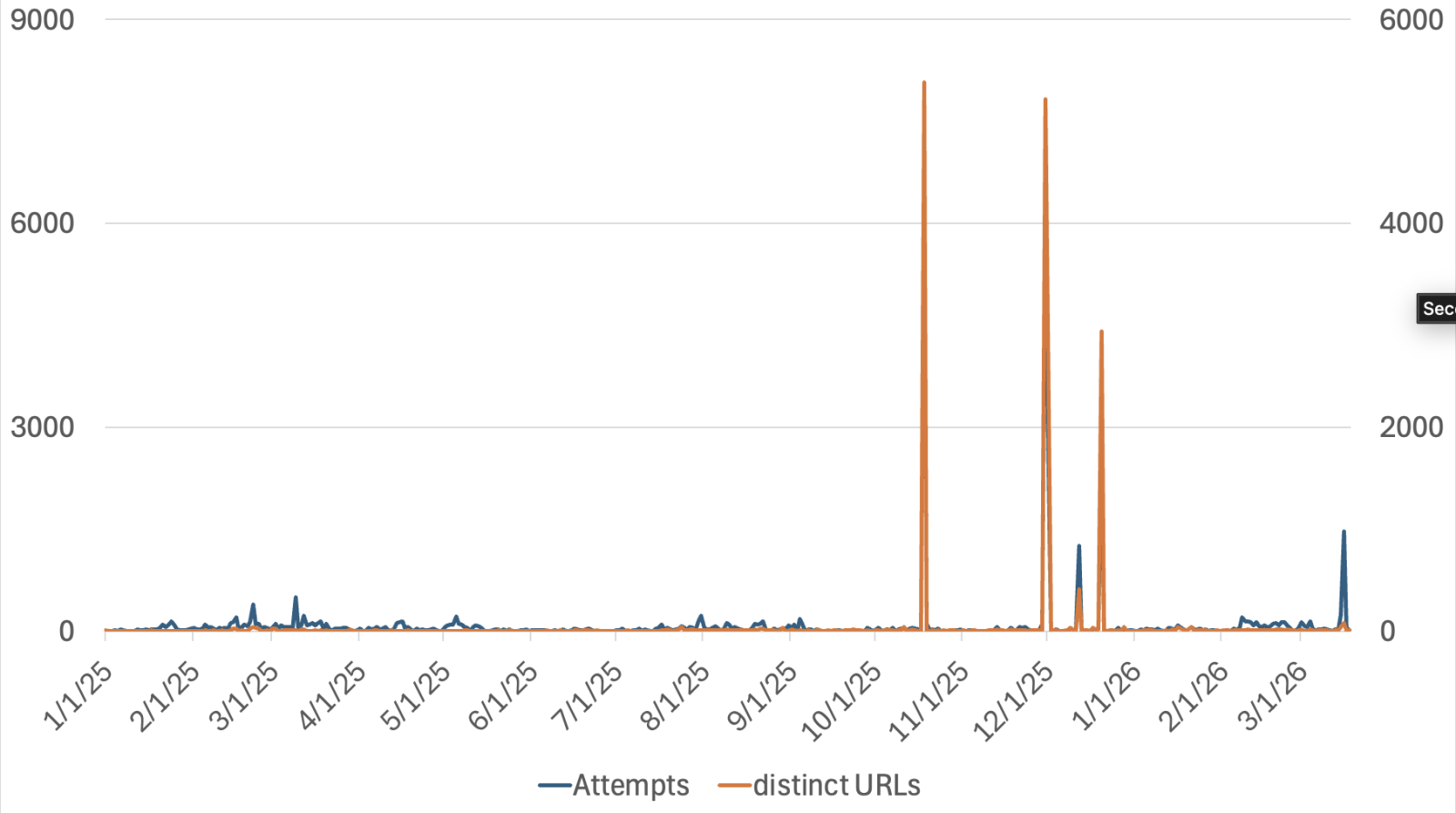
A very popular target of attackers scanning our honeypots is “phpmyadmin”. phpMyAdmin is a script first released in the late 90s, before many security concepts had&#;x26;#;xc2;&#;x26;#;xa0;been discovered. It&#;x26;#;39;s rich history of vulnerabilities made it a favorite target. Its alternative, “adminer”, began appearing about a decade later (https://www.adminer.org). One of its main “selling” points was simplicity. Adminer is just a single PHP file. It requires no configuration. Copy it to your server, and you are ready to go. “adminer” has a much better security record&#;x26;#;xc2;&#;x26;#;xa0;and claims to prioritize security in its development.
- ISC Stormcast For Wednesday, March 18th, 2026 https://isc.sans.edu/podcastdetail/9854, (Wed, Mar 18th)
 on 18 March 2026 at 11:05
(c) SANS Internet Storm Center. https://isc.sans.edu Creative Commons Attribution-Noncommercial 3.0 United States License.
- IPv4 Mapped IPv6 Addresses, (Tue, Mar 17th)on 17 March 2026 at 11:36
Yesterday, in my diary about the scans for “/proxy/” URLs, I noted how attackers are using IPv4-mapped IPv6 addresses to possibly obfuscate their attack. These addresses are defined in RFC 4038. These addresses are one of the many transition mechanisms used to retain some backward compatibility as IPv6 is deployed. Many modern applications use IPv6-only networking code. IPv4-mapped IPv6 addresses can be used to represent IPv4 addresses in these cases. IPv4-mapped IPv6 addresses are not used on the network, but instead, translated to IPv4 before a packet is sent.
- ISC Stormcast For Tuesday, March 17th, 2026 https://isc.sans.edu/podcastdetail/9852, (Tue, Mar 17th)on 17 March 2026 at 02:00
(c) SANS Internet Storm Center. https://isc.sans.edu Creative Commons Attribution-Noncommercial 3.0 United States License.
- /proxy/ URL scans with IP addresses, (Mon, Mar 16th)on 16 March 2026 at 13:48
Attempts to find proxy servers are among the most common scans our honeypots detect. Most of the time, the attacker attempts to use a host header or include the hostname in the URL to trigger the proxy server forwarding the request. In some cases, common URL prefixes like “/proxy/” are used. This weekend, I noticed a slightly different pattern in our logs:
Artificial Intelligence Archives – TechRepublic News, Tips, and Advice for Technology Professionals
- Nvidia-Backed Startup Plans Billion-Dollar AI Fortress in South Koreaby David Curry on 18 March 2026 at 16:27
Nvidia-backed Reflection AI plans a multibillion-dollar data center in South Korea as the US pushes open AI infrastructure to counter Chinese rivals. The post Nvidia-Backed Startup Plans Billion-Dollar AI Fortress in South Korea appeared first on TechRepublic.
- Nvidia Launches Space-Ready AI Platforms For Orbital Data Centersby Esther Shein on 18 March 2026 at 15:21
Nvidia announces AI chip for space-based data centers at the annual GTC 2026 AI conference. The post Nvidia Launches Space-Ready AI Platforms For Orbital Data Centers appeared first on TechRepublic.
- Google Expands Personal Intelligence Across Gemini, Chrome in the USby Liz Ticong on 18 March 2026 at 15:01
Google is expanding Personal Intelligence in the US across Search, Gemini, and Chrome, bringing more tailored AI help across its consumer apps The post Google Expands Personal Intelligence Across Gemini, Chrome in the US appeared first on TechRepublic.
- Nvidia DLSS 5 Backlash: Gamers Rage Over AI Filterby TechRepublic Staff on 18 March 2026 at 09:56
Nvidia’s DLSS 5 reveal is drawing backlash from gamers who say its generative AI changes go beyond enhancement and start rewriting game art. The post Nvidia DLSS 5 Backlash: Gamers Rage Over AI Filter appeared first on TechRepublic.
- Researchers Uncover New Phishing Risk Hidden Inside Microsoft Copilotby Ken Underhill on 17 March 2026 at 19:40
Researchers reveal how Microsoft Copilot can be manipulated by prompt injection attacks to generate convincing phishing messages inside trusted AI summaries. The post Researchers Uncover New Phishing Risk Hidden Inside Microsoft Copilot appeared first on TechRepublic.
Cybersecurity Archives – TechRepublic News, Tips, and Advice for Technology Professionals
- Apple Rolls Out Real-Time Security Fixes Across iPhone, iPad, and Macby Aminu Abdullahi on 18 March 2026 at 16:15
Apple launches Background Security Improvements to fix vulnerabilities in real time, starting with a WebKit flaw affecting Safari on iPhone, iPad, and Mac. The post Apple Rolls Out Real-Time Security Fixes Across iPhone, iPad, and Mac appeared first on TechRepublic.
- Researchers Uncover New Phishing Risk Hidden Inside Microsoft Copilotby Ken Underhill on 17 March 2026 at 19:40
Researchers reveal how Microsoft Copilot can be manipulated by prompt injection attacks to generate convincing phishing messages inside trusted AI summaries. The post Researchers Uncover New Phishing Risk Hidden Inside Microsoft Copilot appeared first on TechRepublic.
- OpenClaw, the Fastest-Adopted Software Ever, Is Also a Security Blind Spotby Tim Freestone on 17 March 2026 at 18:46
OpenClaw is already running inside enterprises, often unnoticed. Learn why banning it fails and how CISOs must shift to data-centric AI governance. The post OpenClaw, the Fastest-Adopted Software Ever, Is Also a Security Blind Spot appeared first on TechRepublic.
- China Probe: How a Fake Fitness Tracker Became an AI ‘Top Pick’by Kezia Jungco on 17 March 2026 at 16:13
A fake fitness tracker fooled AI chatbots in China, exposing risks of AI poisoning and prompting calls for regulation. The post China Probe: How a Fake Fitness Tracker Became an AI ‘Top Pick’ appeared first on TechRepublic.
- Microsoft Confirms Windows 11 Bug Crippling PCs, Blocking Access to Core Driveby Aminu Abdullahi on 17 March 2026 at 14:26
Microsoft says a Windows 11 issue tied to Samsung Galaxy Connect can block access to the C: drive and prevent key apps from opening. The post Microsoft Confirms Windows 11 Bug Crippling PCs, Blocking Access to Core Drive appeared first on TechRepublic.
Quantum Computing Archives – TechRepublic News, Tips, and Advice for Technology Professionals
- Fujitsu, SC Ventures Unveil Roadmap for Quantum Joint Ventureby TechRepublic Staff on 16 January 2026 at 12:13
With Qubitra, they intend to drive practical value by applying quantum approaches to some of the finance sector’s most complex problems. The post Fujitsu, SC Ventures Unveil Roadmap for Quantum Joint Venture appeared first on TechRepublic.
- Unpacking Australia’s $1 Billion Bet On a Future World-Class Quantum Computerby Ben Abbott on 30 August 2024 at 18:57
Australia could become the world’s first quantum computing nation — but it won’t come without controversy. The post Unpacking Australia’s $1 Billion Bet On a Future World-Class Quantum Computer appeared first on TechRepublic.
United Kingdom Archives – TechRepublic News, Tips, and Advice for Technology Professionals
- The Ocean May Be the Next Home for AI Data Centersby David Curry on 5 March 2026 at 15:59
Aikido Technologies plans an underwater data center demo off Norway, betting that offshore wind and seawater cooling could ease AI power constraints. The post The Ocean May Be the Next Home for AI Data Centers appeared first on TechRepublic.
- Europe’s ManoMano Hit: 38M Customer Records Compromised in Vendor Breachby Ken Underhill on 27 February 2026 at 08:14
ManoMano is notifying 38 million customers after a third-party customer service breach exposed personal data, highlighting growing supply chain security risks. The post Europe’s ManoMano Hit: 38M Customer Records Compromised in Vendor Breach appeared first on TechRepublic.
- Apple and Google Agree to UK App Store Reforms After UK Pressureby Aminu Abdullahi on 11 February 2026 at 15:05
Apple and Google agree to UK app store reforms after CMA pressure, pledging fairer reviews and transparency while 30% commission fees remain unchanged. The post Apple and Google Agree to UK App Store Reforms After UK Pressure appeared first on TechRepublic.
- UK to Unveil ‘World-First’ Deepfake Detection Planby TechRepublic Staff on 5 February 2026 at 14:08
The initiative will be led by the Home Office and developed in collaboration with major technology companies, academic researchers, and technical experts. The post UK to Unveil ‘World-First’ Deepfake Detection Plan appeared first on TechRepublic.
- Barnsley Named UK’s First Government-Backed Tech Town in AI Pushby Madeline Clarke on 4 February 2026 at 09:28
The South Yorkshire town is being used for testing AI across public services, education, and local businesses over the next 18 months. The post Barnsley Named UK’s First Government-Backed Tech Town in AI Push appeared first on TechRepublic.